Differentiated Instruction (DI) adapts teaching strategies to address students’ unique learning abilities, styles, readiness levels, and interests—establishing flexible, student-centered classrooms right from the start. Unlike rigid, one-size-fits-all methods, DI modifies lessons through three adjustable components: Content (materials), Process (learning activities), and Product (assessment methods).
This approach transforms instruction by aligning it with how students learn rather than enforcing uniformity. By prioritizing these adaptable elements, DI empowers educators to replace outdated models with responsive frameworks tailored to individual growth.
Key Elements for Differentiated Instruction Success
Before effectively implementing Differentiated Instruction (DI), understanding student needs lays the foundation. Readiness levels, learning profiles, and interest areas directly determine which instructional adaptations will resonate with diverse learners. Consider this your educational triad – three pillars informing every differentiation decision.
Formative assessment results like pre-tests and exit tickets act as diagnostic snapshots. These tools reveal student readiness across specific skills, helping you gauge existing knowledge gaps before introducing complex concepts. A fifth grader struggling with decimal placement, for instance, likely needs fraction review through visual models before algebraic equations.
Individual interviews unlock personal preferences beyond test data. Schedule quick sessions during station rotations by asking:
- Explain your most memorable project experience
- Identify lessons that made difficult concepts ‘click’
- Choose between group discussions or solo research tasks
Regularly analyze how well your classroom practices align with differentiation principles. Three focal areas merit monthly reflection:
Content Accessibility: Do materials match reading/grade levels?
Activity Flexibility: Are multiple learning pathways offered?
Product Variance: Can students demonstrate mastery differently?
Adjusting these elements ensures that instruction evolves with shifting academic needs. Perhaps tiered assignments need more visual components after noting struggling readers. Maybe choice boards require expanded options based on the growing interest in kinesthetic tasks.
With student needs clarified and reflection habits established, exploring practical differentiation strategies becomes our logical progression. Well-prepared teachers armed with insight craft classrooms that bend to students rather than break their curiosity.
Practical Differentiation Strategies for the Classroom
Different learning needs demand dynamic solutions. Consider learning stations as a starting point – divided classroom sections where student groups rotate through distinct content approaches. Teachers might set up interactive zones featuring:
- Video analysis boards
- Creative art stations
- Hands-on puzzle solving
This strategy naturally caters to visual, kinesthetic, and social learners through varied engagement methods.
Building on the stations’ benefits, task cards offer similar flexibility in a condensed form. Unlike whole-class lectures, these portable activities invite students to tackle bite-sized challenges in pairs or trios – particularly effective for auditory learners who thrive through peer discussions.
Educators can differentiate further by color-coding card complexity levels.
The think-pair-share framework systematically engages multiple learning pathways. Students first reflect individually (processing through internal dialogues) and then exchange perspectives with partners before presenting to the class. This three-phase technique aligns with how tactile learners often benefit from structured social interaction to solidify concepts.
Reflection journals complete the cognitive cycle, allowing students to process information through personal writing or drawing. Some discover that diagrammatic entries help concrete thinkers retain math formulas, while poetic learners might craft metaphoric interpretations of historical events.
For text-heavy subjects, literature circles transform silent reading into collaborative discoveries where verbal processors excel. As participants discuss character motivations aloud (auditory engagement) and act out pivotal scenes, educators guide comprehension through targeted questions.
Flexible grouping patterns showcasing adaptability remain key. While mixing ability levels has value, grouping visual artists or movement-oriented learners occasionally fosters focused innovation. Maintain fluid groupings that shift as students’ skills evolve.
Open-ended projects prove invaluable for varied assessments through EdTech integration. Students might demonstrate physics understanding via animation software (digital creatives) or spoken-word recordings (verbal processors). Choice boards specifying project types enable educators to evaluate competencies without format limitations.
This collection of differentiated instruction approaches helps educators honor varied learning styles while supporting IEP/English Language Learners. Teachers gain clearer diagnostic insights through multifaceted student responses to diverse activity types.
Transitioning to multisensory approaches, our next section explores how stimulating multiple senses can cement knowledge retention beyond traditional methods.
Adapting Instruction Through Multiple Modalities
There’s a transformative method to boost student engagement: multisensory learning. Using diverse sensory inputs like videos, interactive models, and hands-on tools allows students to absorb information through visual, auditory, and kinesthetic pathways simultaneously. This approach benefits all learners – particularly those with IEPs or English language barriers – by aligning instruction with how their brains naturally process information.
- Activate visual learners with infographics illustrating math concepts
- Support auditory processors through narrated explanations of science processes
- Engage kinesthetic students by building 3D historical landmarks
Beyond materials, movement integration solidifies retention. Students grasp geography more deeply when plotting floor maps with sidewalk chalk compared to worksheets alone. The physicality of handling coins during financial literacy lessons creates tactile memory hooks.
Yet these strategies form just part of effective Differentiated Instruction. The critical “teaching up” technique elevates expectations by starting with rigorous standards rather than reducing complexity for struggling students.
For example:
“A fourth-grade teacher introduces advanced literary devices in poetry analysis first, then scaffolds support through simplified texts and peer collaboration – raising every learner toward high standards instead of lowering the bar.”
Three reflection strategies extend this impact:
- Monthly learning journal entries where students rate topic engagement
- Quarterly goal-setting templates for literacy skill growth
- Teacher analysis of reflection patterns to tailor future lesson content
The payoff? When classrooms honor how students learn while challenging what they learn, every child encounters material that sparks curiosity rather than confusion.
Now that we’ve explored instructional techniques, we’ll see how differentiated instruction benefits both teachers’ practice and students’ outcomes by creating thriving educational ecosystems.
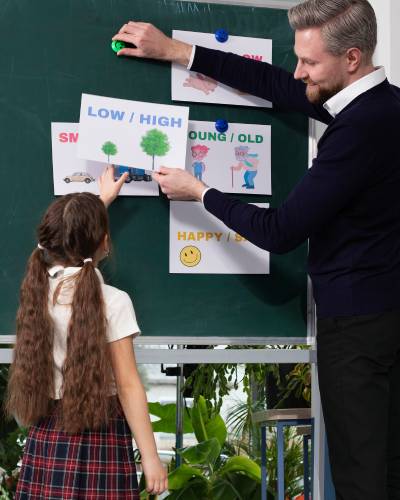
Differentiated Instruction Beyond the Classroom
There are substantial benefits to Differentiated Instruction that extend far beyond your classroom walls, proving equally valuable for novice teachers developing their craft and veteran educators refining their methods. As educational strategies evolve, teacher educators and mentors play crucial roles through ongoing coaching cycles that pair experienced mentors with early-career teachers – like collaborative lab partnerships strengthening STEM instruction.
Consider these implementation strategies:
- Facilitate peer observations where teachers review differentiation tactics across grade levels
- Develop three-tiered professional development tracks addressing foundational, intermediate, and advanced DI skills
- Create video libraries showing DI strategies adapted for ELL classrooms and gifted learner programs
Technology transforms mentoring sustainability through platforms like Prodigy, where teachers complete simulated DI scenarios and receive:
- Automated feedback on lesson adaptations for mixed-ability groups
- Printable templates for tactile math differentiation kits
- Student progress dashboards correlating strategies with mastery rates
Like students progressing through tiered stations, effective DI implementation requires continuous support checkpoints. Monthly reflection surveys combined with quarterly classroom walkthroughs help teaching teams celebrate incremental improvements while identifying new growth areas. Through this sustained partnership between professional development and practical implementation…
Start your Differentiated Instruction Journey
Differentiated Instruction is a continuous journey that begins with intentional, manageable steps. Through flexibility in teaching practices and regular refinement of strategies, educators create student-centered learning environments that grow more effective over time.
Constant follow-up remains crucial – monthly reflections on content adaptations and activity structures help educators identify what supports emerging student needs. Implementing differentiated instruction doesn’t demand perfection; small changes like adding visual lesson summaries or flexible grouping demonstrate immediate progress.
For teachers ready to begin, explore how game-based learning tools through a free teacher account can streamline personalized engagement across ability levels. By blending these resources with gradual strategy implementation, classrooms become spaces where both educators and students gain confidence through incremental growth.